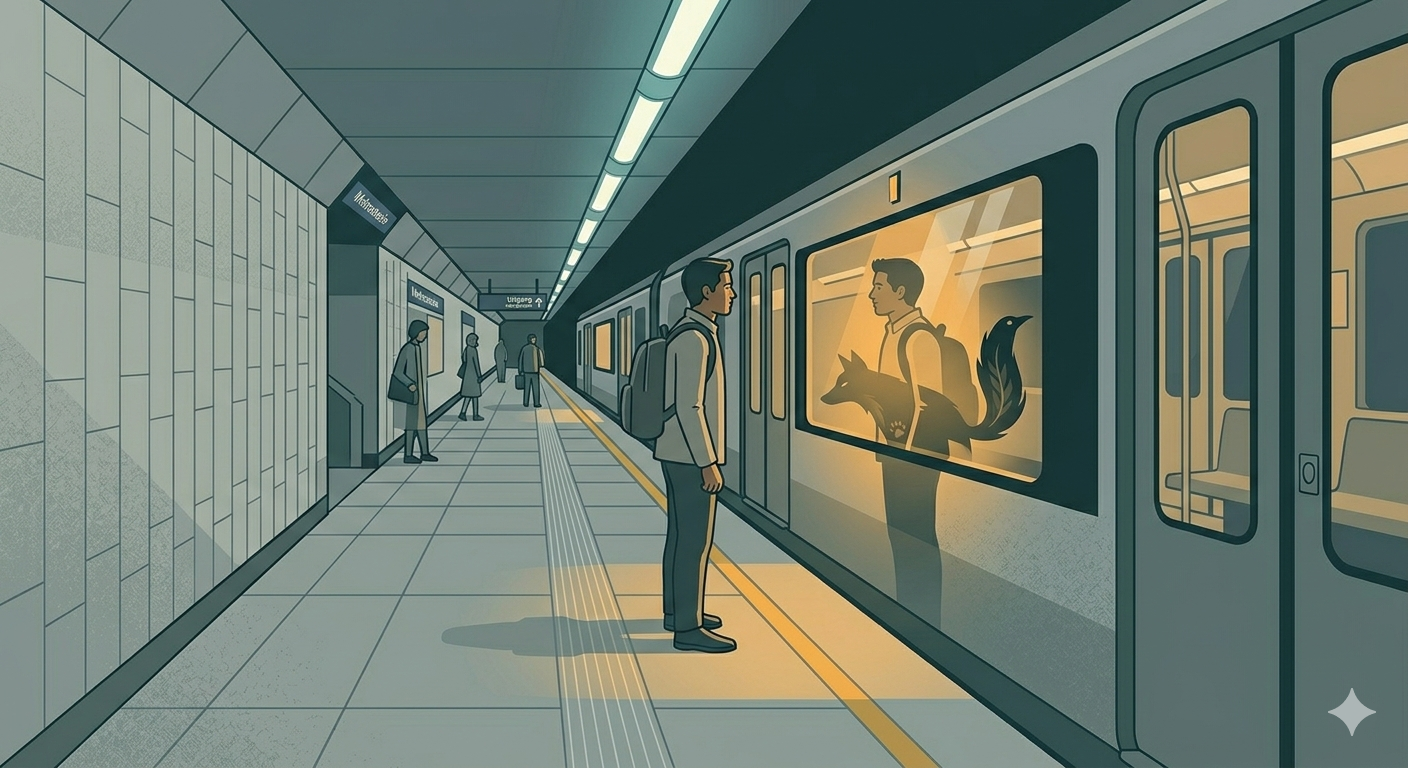
Zorro didn't decide to be "the fox." The fox appeared during his vision quest. That's how it works. The image finds you when you're willing to be found.
Zorro didn’t decide to be “the fox.”
In Isabel Allende’s telling, the young Diego de la Vega went into the wilderness on a vision quest. Alone. No guide. No plan. Just the willingness to go into unknown territory and see what emerged.
A fox appeared.
Not once. Not as decoration. The fox kept showing up. Watching. Moving through the landscape with a particular intelligence. Playful but sharp. Elegant but dangerous.
The fox became his identity. His compass. His game.
He didn’t choose it from a menu of animals. He didn’t intellectually decide “fox suits my personality.” The fox found him. And he recognized it.
That’s how it works.
The Ancient Pattern
Vision quests across cultures share this: you don’t go into the wilderness with a plan to come back as “the lightning bear” or “the curious eagle.”
You go empty. Open. Curious.
And something shows up.
The Lakota called it your spirit guide. The Aboriginal Australians encountered it during walkabout. The Maasai warriors met it in the wild.
Different names. Same process: the image finds you when you’re willing to be found.
Not assigned. Not chosen from a list. Discovered.
What We Lost
We don’t do vision quests anymore.
But we do go into the wilderness. Just a different kind.
We go into daily life. More and more alone. Individualization has given us freedom to choose our own path. To be whoever we want to be.
But nobody told us: if you’re going to walk alone, you need to know where you’re walking.
We got the freedom. We forgot the compass.
So instead of vision quests, we do personality tests.
MBTI tells you: you’re an INTJ. Enneagram says: you’re a 3. StrengthsFinder ranks your top five.
Useful? Sure. These frameworks give you language. Help you see patterns.
But here’s what they can’t give you: your own direction.
They sort you into categories that already exist. You’re this type or that type. You fit here or there.
That’s not the same as discovering the image that’s uniquely yours.
And here's the gap:
if you were to actually look, not at the test results, but at yourself moving through your daily wilderness ,what would you see? And what direction would it give you?
What’s actually there when you stop trying to fit into categories and start exploring what emerges?
The fox and raaf were there in ancient days. But nature around you has changed. The taxonomy should change as well.
Your image isn’t pulled from the past. It’s something you can relate to now. In your context. In your world.
The fox that shows up for you isn’t the same fox that shows up for someone else. Your pioneer isn’t my pioneer. Your raaf isn’t someone else’s raaf.
The image that emerges from your work carries something no taxonomy can capture: it’s yours. And it points you where you need to go.
Why Your Own Image Matters
When Zorro put on the mask, he wasn’t performing a role someone handed him. He was embodying something he’d discovered about himself.
The fox wasn’t decoration. It was direction.
That’s what a unique image does. It carries your compass.
Not “you’re this type of person, so do these things.”
But “this image emerged from your exploration, and it shows you where you’re oriented.”
You don’t have to remember it. You don’t have to try to be it. It’s already how you move through the world. You’re just making it visible.
The Image Finds You
I’ve watched this happen.
Someone starts the work thinking they’ll “figure out” what their image should be. They’re looking for the right answer. The smart choice. The thing that sounds good.
Then they stop trying to decide.
They play. They explore. They bump into their gaps with curiosity instead of judgment.
And something shows up.
A fox. A raaf. A pioneer. Something they didn’t expect and can’t quite explain but immediately recognize.
“Oh. That’s it. That’s me.”
Not “that’s a good description of me.”
But “that’s the thing I’ve been without knowing it.”
The image isn’t new. It was always there. The work just made it visible.
Not From A Menu
This is why Win2All doesn’t offer you a menu of archetypes to choose from.
Warrior. Lover. King. Magician. Sage. Fool.
Those are powerful frameworks. Jung’s archetypes are brilliant. They help you understand patterns.
But they’re not yours.
Your image isn’t on a menu. It emerges from the territory you explore.
Zorro didn’t pick “fox” because it was available. The fox appeared because that’s what was there when he went looking.
Same with you.
Your image won’t be one I can predict or assign. It will be the thing that shows up when you’re willing to go into your own wilderness and see what’s actually there.
The Wilderness Is Your Gaps
You don’t need to go into geographical wilderness to find your image.
The wilderness is the unknown territory in yourself. The gaps you can’t see. The patterns you’re running without knowing it. The direction you haven’t discovered yet.
Your gaps are your wilderness.
And your image is waiting there.
Not hiding. Not testing you. Just there. The way the fox was there for Zorro.
You can’t think your way to it. You can’t decide it intellectually. You can only discover it by being willing to explore.
The Invitation
So here’s the question:
Are you willing to go into your wilderness without knowing what you’ll find?
Not “which animal do I want to be?”
But “what shows up when I stop deciding and start discovering?”
Most people never take that journey. They stay with the borrowed language. The personality types. The frameworks that sort them into existing categories.
Those frameworks are useful. But they’re not the same as finding your own image.
Zorro could have stayed Diego de la Vega. Followed the path expected of him. Lived an acceptable life. Never gone into the wilderness.
But he wouldn’t have found the fox.
And without the fox, he wouldn’t have found his game.
Your image is out there. In the gaps you haven’t explored yet. In the wilderness of what you can’t see about yourself.
It’s not waiting for you to choose it.
It’s waiting for you to find it.